
.png)
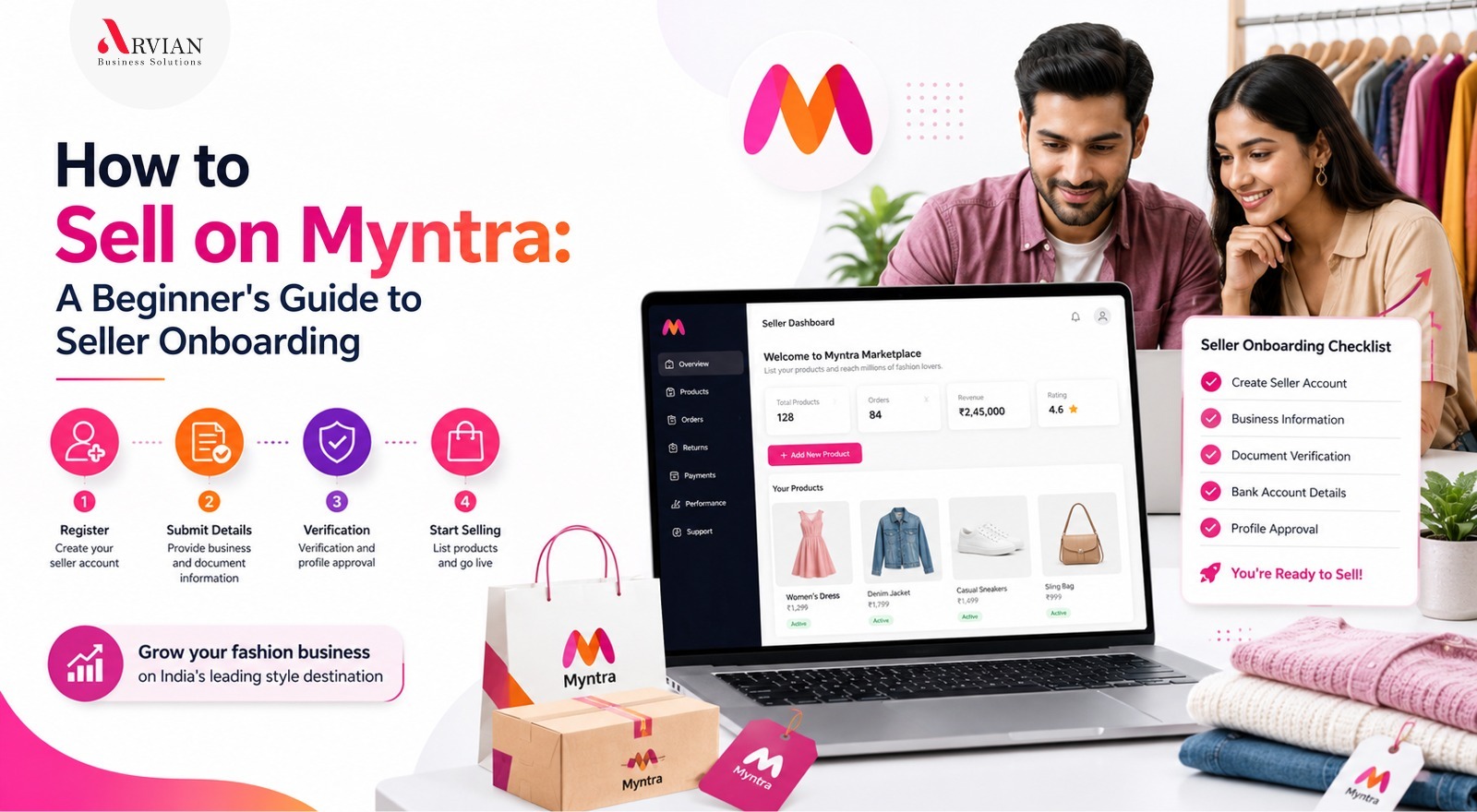
Myntra isn't like Amazon or Flipkart, and that trips up a lot of first-time sellers who assume the process will be the same. It's a curated fashion and lifestyle marketplace, which means it doesn't onboard just anyone with a GST number and a product to list. Myntra reviews brands before letting them in, and a fair number of applications get turned down — not because the products are bad, but because the paperwork, positioning, or presentation wasn't right going in.
If you're a fashion, footwear, beauty, or lifestyle brand thinking about Myntra as your next channel, here's what the onboarding process actually looks like, what you need in place before you apply, how the platform works once you're live, and where most sellers lose time without realising it.
Why Myntra Is Worth the Extra Effort
Before getting into the process, its worth understanding why sellers put up with a longer, stricter onboarding compared to Amazon or Flipkart. Myntra's customer base skews toward buyers who are already primed to spend on fashion and lifestyle products — they're not comparison-shopping for the cheapest option the way a lot of general marketplace traffic does. That tends to translate into better average order values and a more brand-conscious buyer, which is exactly why the platform curates who gets in rather than opening the doors to everyone.
The trade-off is that Myntra treats every new seller as a brand application first, and a marketplace listing second. If your business isn't ready to be evaluated that way, the process will feel unnecessarily slow. If it is ready, the same strictness works in your favour once you're live, because you're competing in a marketplace that's already filtered out a lot of low-quality noise.
Myntra Is a Brand-First Marketplace, Not an Open One
The biggest mental shift for new sellers is understanding that Myntra isn't optimised for volume the way Amazon or Flipkart are. It's built around curated brand storefronts, tighter quality control, and a customer base that expects a certain look and feel.
This shows up right at the start of the process. Myntra wants to see a registered business, not an individual selling out of a spare room, and it wants documentation that proves you either own the brand or have proper authorisation to sell it. It also wants your product photography, sizing information, and brand story to already look like it belongs on a premium fashion platform — not something you'll clean up after going live.
What You Need Before You Even Apply
Getting the eligibility basics sorted before you touch the Partner Portal will save you weeks. At minimum, you'll need:
- A registered business entity — sole proprietorship, partnership, LLP, or private limited company. Unregistered individuals aren't eligible.
- An active GSTIN, matched exactly to your business name and PAN. This is non-negotiable for every product category on Myntra, and it needs to be verified before the rest of your application form even unlocks.
- Brand ownership proof, or an authorisation letter if you're reselling someone else's brand rather than manufacturing under your own name.
- A PAN card and a government-issued ID (Aadhaar works) tied to the business.
- Trademark documentation, if you have it — not always mandatory, but it strengthens a brand application considerably and can speed up the review.
- Product images and catalogue content that meet Myntra's photography and listing standards — checked more strictly here than on most other marketplaces.
- A bank account in the business's name for settlements.
If your business is still operating out of your home state and you're planning to route fulfilment through a Delhi, Bangalore, or Gurgaon-based warehouse, you'll likely need GST registration in that state too — which is where a lot of sellers get stuck without realising it until the application's already underway.
The Actual Onboarding Steps
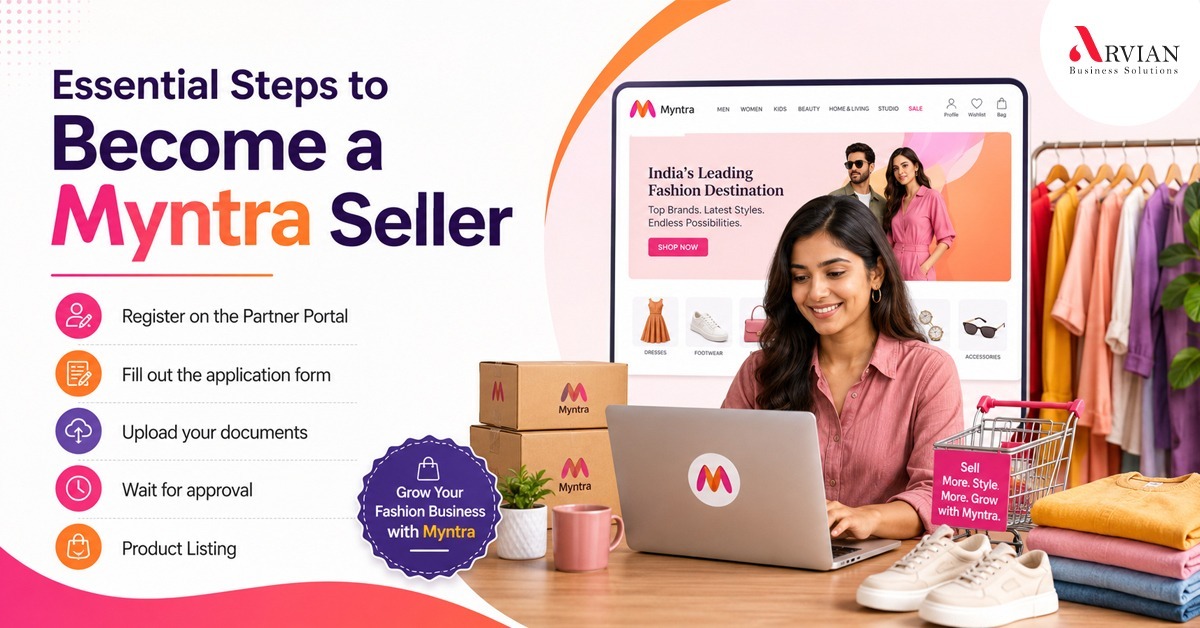
Once your documents are in order, the process runs through Myntra's official Partner Portal — not a sales rep, not a third-party onboarding link. Here's the general flow:
1. Register on the Partner Portal.
You'll verify your mobile number and business email via OTP, and the business email becomes your primary login going forward. Using a proper business email rather than a personal Gmail account tends to get applications looked at faster, since Myntra's onboarding team appears to prioritise registered-domain emails.
2. Fill out the application form.
This is broken into several sections — business details, GSTIN verification, product categories, and brand information. Every field needs to match your uploaded documents exactly, because Myntra's verification team cross-checks entries against the paperwork rather than taking the form at face value.
3. Upload your documents.
GST certificate, PAN, ID proof, and brand ownership or authorisation certificates all go in at this stage. Incomplete or mismatched documents are the single most common reason applications stall here.
4. Wait through the review and brand approval process.
This is the part that catches people off guard. Myntra's approval timeline can run anywhere from a few weeks to a couple of months, depending on your category and how ready your documentation is. Fashion and lifestyle categories especially go through a brand-quality review, not just a compliance check — someone is actually looking at your product photography, pricing positioning, and brand presentation before signing off.
5. Catalogue setup and going live.
Once approved, Myntra's onboarding team works with you to get your first set of listings live, set up your size charts and inventory, and connect your fulfilment process.
Understanding Myntra's Fulfilment Models
Once you're approved, one of the first operational decisions is how your orders actually get shipped. Myntra generally offers a couple of models, and picking the right one matters more than most new sellers expect:
Myntra Fulfilled (warehouse-based): You ship your inventory into a Myntra fulfilment centre, and Myntra handles picking, packing, and shipping to the end customer. This tends to mean faster delivery times, which helps with both customer experience and how prominently your listings show up in search and category pages. It also means your stock needs to be physically present in the state where that fulfilment centre sits — which brings the GST registration question back into the picture.
Seller fulfilled: You hold your own inventory and ship orders directly once they come in. This gives you more control and avoids moving stock into a third-party warehouse, but delivery times are typically slower, and slower delivery has a real, measurable impact on conversion in a marketplace where buyers are used to fast fashion delivery windows.
Most growing sellers start seller-fulfilled to keep things simple, then move into the warehouse model once volume justifies it — at which point the state-specific GST registration for the fulfilment centre's location becomes a genuine requirement rather than a future consideration.
Categories, Pricing, and Commission
Myntra's category structure is fairly granular — apparel, footwear, accessories, beauty, and home are the broad buckets, each with its own sub-categories and, in some cases, its own quality benchmarks. Commission rates vary by category and typically sit in a mid-single-digit-to-low-double-digit percentage range, though the exact figure depends on your specific category, your seller tier, and any negotiated terms if your brand carries enough volume to warrant it.
Pricing strategy on Myntra tends to work differently than on Amazon, where the lowest price often wins the buy box. Myntra buyers are less price-anchored and more influenced by brand presentation, so sellers who compete purely on discounting often see weaker long-term traction than those who invest in strong photography, complete size guidance, and a coherent brand story across their listings.
Photography and Catalogue Standards
This is worth calling out separately because it trips up more first-time sellers than almost anything else in the process. Myntra has specific requirements around image backgrounds, model shots versus flat-lay shots, minimum resolution, and consistency across a product's variants. Listings that would clear review on a general marketplace without issue sometimes bounce back here for image quality alone.
Size charts are the other recurring issue. Because returns are a real cost driver in fashion e-commerce, Myntra pushes sellers to provide detailed, accurate sizing information upfront, and incomplete size data is a common reason catalogue submissions get sent back for correction before going live.
Where Sellers Usually Lose Time
A few patterns show up again and again with new Myntra sellers:
- Applying before the GST situation is settled. If your GSTIN doesn't match your registered business name exactly, or you don't have registration in a state where you plan to fulfil orders from, the application gets held up before it even reaches the brand review stage.
- Treating it like a volume marketplace. . Listings that would sail through on Flipkart sometimes get rejected on Myntra for image quality, incomplete size information, or brand story gaps. The bar for "market-ready" is genuinely higher here.
- Not having authorisation documents ready if reselling. If you're not the brand owner, missing or informal authorisation paperwork is one of the fastest ways to get an application rejected outright.
- Underestimating the timeline. Founders who assume they'll be live within a week are often still waiting on brand approval a month later. Building in that buffer before promising launch dates to your own investors or team avoids a lot of unnecessary pressure.
- Choosing the wrong fulfilment model too early. Committing to warehouse-based fulfilment before volume justifies it adds GST and logistics complexity you don't need yet; staying seller-fulfilled too long once volume grows costs you in slower delivery and weaker visibility.
Growing Once You're Live
Getting approved is really just the starting line. Sellers who do well on Myntra tend to treat their first few months as a calibration period — watching which categories and price points convert, refining photography based on return rates, and gradually expanding their catalogue rather than launching everything at once.
Myntra also runs its own promotional events and sale periods throughout the year, and participation in these can meaningfully move volume for sellers whose catalogue and inventory are ready for the spike. It's worth building a working relationship with your category manager early, since a lot of the informal guidance about upcoming promotional slots and category-specific expectations comes through that relationship rather than the portal itself.
How This Connects Back to GST and Business Registration
Most of the friction in Myntra onboarding isn’t really about Myntra — it’s about whether your underlying business paperwork is clean before you start. A GSTIN that doesn’t match your PAN details, a business structure that isn’t properly registered, or missing registration in the state where your fulfilment warehouse is located can slow down or even block your application, regardless of how strong your products are.
This is where Myntra Seller Onboarding Services from Arvian Business Solutions can help. We handle the essential groundwork before your marketplace application, including accurate GST registration, company incorporation for businesses still operating informally, and virtual office addresses in states where additional registration may be required.
Whether you're preparing to sell on Myntra or planning a broader multi-state e-commerce expansion across Amazon, Flipkart, and Myntra, having the right business and GST foundation in place can make the onboarding process significantly smoother.
Getting your documentation and registrations right before you apply can help reduce unnecessary back-and-forth, avoid documentation issues, and put your brand in a stronger position to begin selling online.